
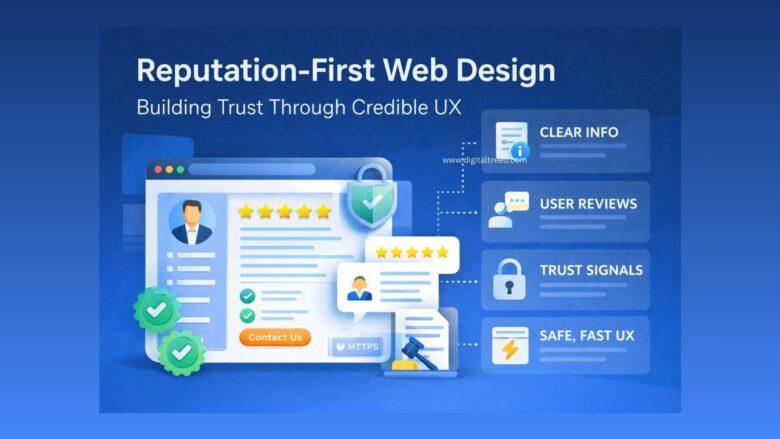
A website can look polished and still make people uneasy.
Visitors decide whether to trust a business in seconds. Often, before they read a word. If the design feels unclear, outdated, or careless, credibility drops fast. And once trust slips, traffic no longer matters.
This is why web design services are no longer just about visuals. They shape reputation.
The strongest sites today are built to signal legitimacy, stability, and transparency. Design is no longer decoration. It is proof.
What Reputation-First Web Design Actually Means
Reputation-first web design prioritizes credibility over aesthetics.
The goal is not to impress. The goal is to reassure.
These sites are built around clear information, visible trust signals, and consistent structure. They answer quiet questions visitors ask without saying out loud:
- Is this business real?
- Can I trust them?
- Do others trust them?
- Will I regret contacting them?
Design choices either answer those questions or avoid them. Avoidance costs trust.
Good web design services now account for how both search engines and people evaluate legitimacy.
Why Clicks Are the Wrong Metric
Clicks show interest. They do not show confidence.
Reputation-focused sites track different signals:
- how long people stay
- whether they move deeper into the site
- whether they search the brand name later
- whether they come back
- whether they contact the business without hesitation
Short visits and fast exits often mean doubt, not disinterest.
If a site looks good but feels unreliable, users leave quietly. No bounce rate explains why.
The Core Principles Behind Trustworthy Web Design
Online credibility is built from patterns, not single elements.
Strong reputation-first sites share a few consistent traits:
- clear navigation
- complete business information
- visible reviews and testimonials
- transparent policies
- real people attached to content
- stable layouts that do not feel rushed
- secure, fast performance
None of these is exciting on its own. Together, they create confidence.
This is where professional web design services matter. Trust does not come from a single badge or section. It comes from cohesion.
Trust Signals That Actually Matter
Trust signals work when they feel earned, not forced.
Effective signals include:
- real customer reviews that match tone and detail
- testimonials with names or context
- security indicators like HTTPS
- privacy and contact pages that are easy to find
- consistent branding across pages
- proof of experience, not slogans
Overloading a page with logos or badges often backfires. Subtle, well-placed signals work better than loud ones.
User Experience Is a Reputation Signal
Confusing layouts damage credibility.
If users struggle to find answers, trust erodes even if the business is legitimate.
Reputation-first UX focuses on:
- simple navigation
- predictable page structure
- readable typography
- mobile usability
- accessibility basics
When a site feels easy, it feels safer. When it feels safe, users stay.
This is not about trends. It is about removing the friction that creates doubt.
Site Structure Builds Authority
How content is organized matters as much as what it says.
Clear structure signals expertise. Messy structure signals uncertainty.
Strong sites:
- group related topics clearly
- avoid orphan pages
- guide users logically
- avoid overwhelming menus
- reinforce core services repeatedly but calmly
This structure helps users understand what the business does and why it is qualified to do it.
Search engines notice this, too. But people see it first.
Content Design Is Part of Design
Words are design elements.
Thin content, vague language, or generic messaging weakens credibility even if the layout looks modern.
Authority-building content:
- answers real questions
- explains processes clearly
- avoids exaggeration
- shows experience instead of claiming it
- stays consistent across pages
Reputation-first web design treats content as a trust asset, not filler.
Visual Design and Professional Perception
Visual choices shape emotional judgment.
Colors, spacing, and typography signal seriousness or carelessness. There is no neutral design.
Effective reputation-driven visuals:
- use restrained color palettes
- prioritize readability
- avoid stock-heavy layouts
- maintain consistent spacing
- feel intentional, not trendy
Visitors do not analyze these details. They feel them.
Technical Performance Is Silent Credibility
Slow or broken sites feel unreliable.
Security warnings, loading delays, or mobile issues quietly damage reputation.
Credibility requires:
- fast load times
- secure connections
- stable layouts
- clean mobile experiences
These are not technical extras. They are trust foundations.
Web design services that ignore performance often create sites that look good but feel wrong.
Where Reputation and Web Design Overlap in Practice
At NetReputation, web design is treated as part of reputation strategy, not a separate service.
That means design choices support credibility, search visibility, and trust simultaneously. The site itself becomes a reputation asset, not just a marketing tool.
This approach is becoming standard for businesses that understand how fast perception forms online.
The Real Goal of Modern Web Design
The goal is not traffic.
The goal is confidence.
A reputation-first site does not chase attention. It earns belief.
When design supports trust, everything else works better. Search performance improves. Conversions feel natural. Reviews align with expectations.
Web design services that focus on reputation do not just build websites. They build reassurance.
And reassurance is what turns visitors into customers.

