
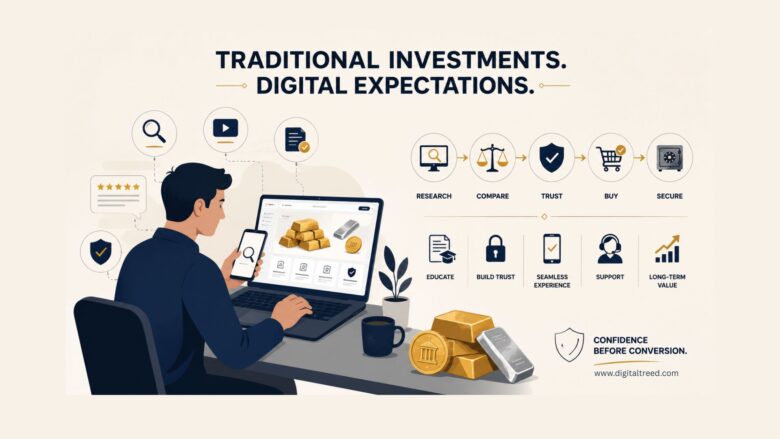
Traditional Assets Are Meeting Digital Expectations
Buying traditional investment products used to feel slow, formal, and a little intimidating. A customer might visit an office, speak with an adviser, collect brochures, compare prices by phone, and then wait for paperwork. That process still exists, but it no longer matches how many people make decisions.
Today’s buyer researches first. Quietly. Usually from a phone.
Someone interested in a traditional asset may compare providers during lunch, read reviews at night, watch explainer videos on YouTube, and check fees before speaking to anyone. By the time they submit an inquiry, they’ve already formed an opinion. That changes the whole sales journey.
For businesses in this space, the first impression often happens long before a call. It happens on a search results page, a landing page, a pricing guide, or a simple FAQ that answers the question the customer was too embarrassed to ask.
Research Comes Before the Conversation
Customers don’t want to feel uninformed when dealing with investment products. That’s fair. Money decisions carry pressure. Nobody wants to be the person who clicks too fast, signs too soon, or misses a hidden fee buried in the fine print.
This is why educational content now plays such a major role. Clear guides, comparison pages, explainer articles, and videos help cautious buyers move from confusion to confidence. Not hype. Confidence.
A business that explains how pricing works, what risks to consider, and what documents buyers should check earns trust before the sales team gets involved. This is especially important for traditional investment products, where buyers often need extra reassurance around authenticity, storage, access, and long-term value.
Trust is the product behind the product.
Comparison Is Now Part of the Buying Habit
Digital buyers compare everything. Hotels. Software. Insurance. Coffee machines they’ll use twice and then ignore. Investment products are no different.
A person may open five tabs, scan provider reviews, check industry credentials, read customer complaints, and compare service terms. Fast. If one website looks outdated, vague, or difficult to use, it loses attention almost instantly.
This is where strong digital marketing becomes more than promotion. It becomes proof. A clean website, helpful content, transparent fees, secure checkout, and visible support options all tell the buyer, “This business has its act together.”
For example, people researching gold sellers may compare product ranges, premiums, delivery options, buyback policies, and customer reviews before deciding which provider feels reliable enough to contact.
The Checkout Experience Has Changed Too
Traditional products no longer need traditional friction. Buyers now expect digital forms, secure payments, instant confirmations, live chat, mobile-friendly dashboards, and clear documentation. If they can manage banking, tax files, and business software online, they expect investment platforms to keep up.
That doesn’t mean every product should be treated like a quick e-commerce purchase. Some decisions need care. Some need compliance checks. Some need human support. Still, the experience should feel modern.
Slow websites create doubt. Confusing steps create hesitation. Broken forms? That’s where conversions go to die.
The best platforms reduce anxiety at each stage. They show what happens next, explain timelines, display support details, and make the buyer feel guided without being pushed.
Storage and Ownership Need Clear Digital Communication
Traditional investment products often involve more than the purchase itself. Buyers want to understand where the asset goes, how ownership gets recorded, what security applies, and how access works later.
This is where digital communication matters. A simple dashboard, clear receipt, downloadable certificate, or secure account area can make the experience feel more professional. It also reduces repetitive support questions, which every operations team quietly appreciates.
For assets that require secure storage, customers may also compare private vaults based on location, insurance arrangements, access rules, audit processes, and the level of physical and digital security described on the provider’s website.
The easier this information is to understand, the more confident the buyer becomes. Clarity sells. Confusion stalls.
Content Builds Confidence Before Conversion
A good content strategy doesn’t just chase keywords. It answers real buyer doubts.
“What fees should be expected?”
“How does ownership get verified?”
“What happens after purchase?”
“Can assets be resold?”
“What risks should be understood first?”
These questions are valuable because they reflect genuine buying intent. A visitor asking detailed questions is not wasting time. They’re getting close.
SEO, content marketing, UX design, and conversion strategy all connect when the product requires trust. The goal isn’t to flood the internet with generic articles. The goal is to build a path that helps buyers feel informed enough to take the next step.
Digital Trust Is Now a Business Asset
The rise of digital-first buying journeys doesn’t make traditional investment products less serious. It makes the online experience more important.
A polished website alone won’t convince a cautious buyer. Neither will a few keywords dropped into a blog post like loose change in a drawer. Businesses need useful content, visible credibility, secure systems, and a buying journey that respects how people actually make decisions today.
Traditional investment products may still rely on long-standing principles: value, security, reputation, and trust. The difference is that buyers now look for those signals online first.
And they notice everything.

