
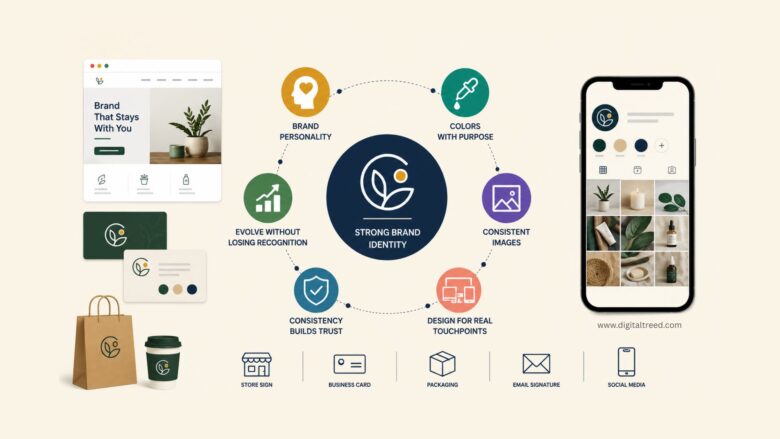
A strong visual identity begins long before a logo is designed or a color palette is chosen. It starts with personality. Every small business has a character, even if the owner has never written it down. A bakery may feel warm, nostalgic, and handmade. A fitness studio may feel bold, energetic, and disciplined. A consulting agency may feel calm, precise, and trustworthy. When a business understands its personality, every visual decision becomes easier.
The goal is not to copy competitors or follow every design trend. The goal is to communicate what the business stands for in a way customers can recognize quickly. A clear personality helps guide the tone of images, the shapes in a logo, the colors on a website, and even the style of social media posts.
Choose Colors with Purpose
Colors influence how people feel about a brand. Blue often feels reliable and professional, green can suggest nature or growth, and yellow can feel cheerful and optimistic. However, color choices should not be based only on general meanings. They should match the audience and the business experience.
A children’s toy shop may benefit from playful colors, while a luxury skincare brand may need soft, elegant tones. A small business does not need many colors. In fact, using too many can make the brand look messy. A main color, a secondary color, and one or two neutral shades are usually enough.
Consistency matters more than complexity. When customers see the same colors across a website, packaging, flyers, and online profiles, they begin to remember the business more easily.
Keep Images Consistent
Images are one of the fastest ways to shape a customer’s impression. Product photos, team portraits, lifestyle images, and promotional graphics should feel like they belong to the same brand. This does not mean every image must look identical, but they should share a similar mood.
Lighting, angles, filters, and composition all play a role. A handmade jewelry shop might use soft natural light and simple surfaces. A technology repair service might use clean, sharp images with minimal distractions. A restaurant might show close-up food photos that feel warm and inviting.
For online stores, a simple editing step like remove background can help products look clean and consistent without requiring an expensive studio setup. Good images make a small business appear more professional, which can increase trust before a customer ever makes contact.
Design for Real Customer Touchpoints
A visual identity should work in the places customers actually see it. A logo that looks beautiful on a large screen may not work as a tiny profile picture. A color combination that looks elegant on packaging may be hard to read on a mobile website. Good branding is practical as well as attractive.
Small businesses should test visuals across real touchpoints: business cards, Instagram posts, email signatures, product labels, invoices, storefront signs, and website buttons. Each item should feel connected, even if the layout changes.
Readability is especially important. Fonts should be clear, spacing should be comfortable, and important information should not be hidden behind decoration. Customers should never have to struggle to understand what a business offers.
Evolve Without Losing Recognition
A brand identity does not have to stay frozen forever. As a business grows, its visuals may need to improve. A homemade logo may be replaced with a professional version. Photos may become sharper. Packaging may become more refined. These updates are healthy when they make the brand clearer.
The key is to evolve without confusing loyal customers. Keep recognizable elements, such as a familiar color, symbol, or tone. Gradual improvement is often better than a sudden complete change.
A strong visual identity helps a small business look trustworthy, memorable, and ready to serve. It does not require a huge budget. It requires thoughtful choices, consistency, and a clear understanding of the people the business wants to reach.

