
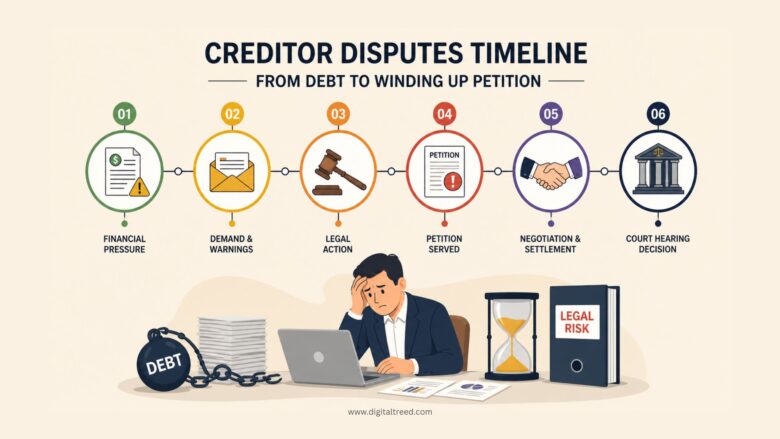
Serious creditor disputes rarely appear out of nowhere. In many cases, they begin with missed payments, cash flow issues, or disagreements that slowly spiral into something much bigger. For business owners, the process can feel overwhelming because situations often escalate faster than expected.
Understanding the timeline behind a major creditor dispute can help companies react earlier, communicate better, and avoid making rushed decisions under pressure.
It Usually Starts With Growing Financial Pressure
Most disputes begin long before lawyers or courts become involved. A business may fall behind on invoices because of late client payments, rising costs, or temporary trading problems. At first, creditors often send reminders or request payment updates.
Over time, the tone changes. Formal warnings may arrive, solicitors may become involved, and creditors may start pushing harder for repayment. Many directors still hope the issue will settle itself, but silence or delays can make creditors lose confidence quickly.
This early stage is important because it often determines whether the situation can still be resolved privately.
Legal Action Changes the Situation Quickly
Once formal legal action begins, the pressure increases significantly. One of the most serious steps a creditor can take is issuing a winding up petition, which is a request to force a company into compulsory liquidation over unpaid debts.
Before this stage, creditors may issue a statutory demand that gives the business a limited period to pay or dispute the debt. Ignoring it can make the situation much worse later on.
For many businesses, this is the point where the reality of the dispute finally hits. Directors suddenly face strict deadlines, legal paperwork, and the possibility of severe reputational damage if matters continue to escalate.
Service of the Petition Creates Immediate Pressure
Once a petition is formally served, the timeline becomes very tight.
Businesses often have only a short period before the petition can be advertised publicly in The Gazette. This matters because banks frequently react by freezing company accounts once the petition becomes public knowledge.
That single development can cause major disruption. Suppliers may stop trading with the business, customers may become nervous, and employees may begin worrying about job security.
Even companies that were still operating relatively normally can suddenly find themselves struggling to function day to day.
Negotiations Often Intensify at This Stage
The period after service is usually the most active point for negotiations.
Some businesses manage to repay the debt in full, while others agree on payment plans or seek restructuring options. In some situations, the debt itself may be disputed.
Creditors also reassess their position during this stage. Some primarily want repayment and are willing to negotiate, while others may believe liquidation is unavoidable.
Strong communication becomes critical here. Businesses that respond quickly and professionally often have a better chance of finding a workable solution before matters reach court.
Court Hearings Can Decide the Future of the Business
If no agreement is reached, the dispute eventually moves to a court hearing.
At this stage, the court examines whether the debt is genuinely owed and whether the company can realistically pay its creditors. Outcomes can vary widely depending on the circumstances.
Some petitions are dismissed after payment or settlement. Others may be delayed to allow restructuring efforts to continue. In more serious cases, the court may grant a winding-up order that places the company into compulsory liquidation.
For directors, this is often the culmination of weeks or months of growing pressure.
Early Action Usually Creates More Options
One of the biggest mistakes businesses make during creditor disputes is waiting too long to act.
Many directors hope problems will improve on their own, but creditor disputes tend to become harder to resolve once formal legal proceedings begin. Early communication, professional advice, and realistic planning can often prevent situations from escalating further.
Serious disputes are never easy, but understanding how the process unfolds helps businesses stay calmer, make clearer decisions, and respond before their options begin to disappear.

