
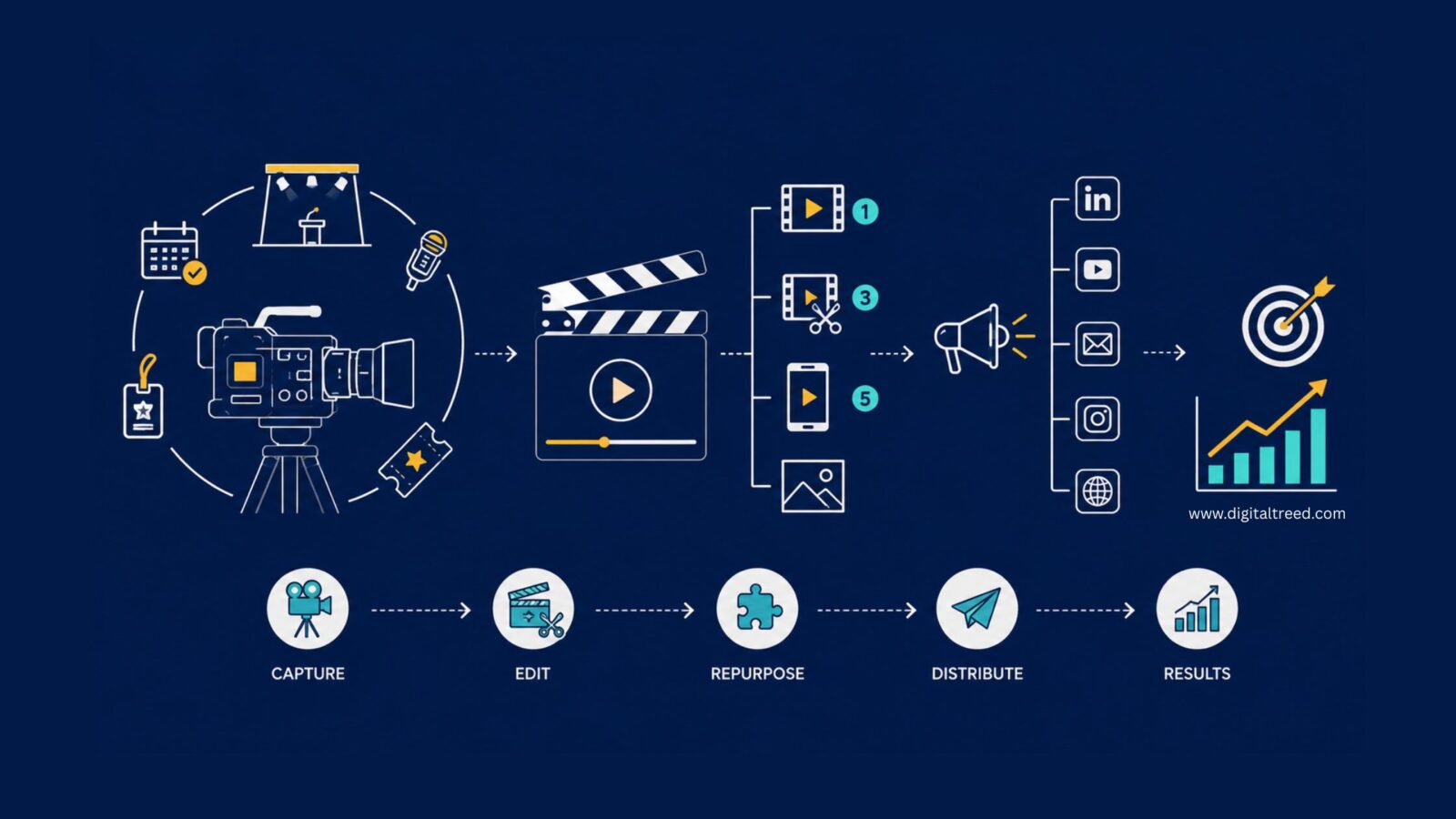
Many businesses view event videography as a receipt. It’s something you file away after the fact and forget – but why not see it as an investment instead? If you record a conference or product launch, your content calendar could be set for at least six months.
Why one event shoot should outlive the event itself
A 20-minute keynote presentation contains a solid amount of raw material, both for conveying a message or information, and for marketing content. If you film it properly, you will be able to edit it into a highlight reel, several testimonial clips, a few striking phrases for your social media followers, and some b-roll footage to use for advertisements down the line.
Sadly, many organizations fail to understand the potential that solid event video footage can offer. Instead, they film their seminar and walk away with one recap video. The rest is left untouched. The fact is that this footage can be re-edited into dozens of video clips. This isn’t sales talk. This is the reality of the situation when you prepare to make quality video assets from the outset.
Map your footage to the buyer journey, not just the event agenda
Most event video strategies fail because they try to create a video for each time slot rather than thinking about what potential clients would want to see at the different points in their decision-making process.
An awareness video describing the size of your event, how well attended it was, and the lively atmosphere will appeal to those who have just learned about your brand. These videos should include wide shots, crowd reactions, and a fast cut of the room filling up.
Consideration videos, on the other hand, are for people who are already comparing vendors, perhaps the product reveal, customer testimonial, or when a speaker addressed an objection that a viewer might have.
Lastly, conversion videos, aimed at those closest to making a purchase, typically include unscripted, rough-around-the-edges client testimonials recorded at your event. These often convert better than polished case study videos as they read as being more real.
The 1-3-5 rule for repurposing event footage
For a simple framework your team can follow – without a strategy meeting every time – use this: one full-length video, three highlight edits, five social cut-downs.
The full-length video is your archive piece – the entire keynote or panel, valuable for SEO and for anyone who wants the complete context. The three highlight edits run two to three minutes each, built around specific themes: one on the product announcement, one on customer stories, one on the overall event experience. The five social cut-downs are 30 to 60 seconds, built for scroll-stopping on LinkedIn, Instagram, or TikTok, each with its own caption and its own call-to-action.
That’s nine assets from one shoot. Space them out and you’ve got months of content without touching a camera again.
Don’t skip the live stream just because you’re recording anyway
Many event organizers believe that recording and live streaming are redundant – choose one, why do both? The reality is that they are not redundant. They serve different audiences in different ways.
Live streaming serves non-attendees and creates urgency for the live event (“watch now or miss it”). Recorded video serves attendees that may want to re-watch, and all future potential attendees who couldn’t be there in real time. It becomes your promotional material for the next event. Run both from the same multi-camera setup and you haven’t doubled your costs. You’ve just given yourself two more products to promote.
Build a post-event email sequence that isn’t just a thank-you note
Many post-event emails are treated as a one-and-done: “thanks for coming, here’s the recording. Enjoy!” and radio silence for the next 6 months.
This is a missed opportunity, especially when we know that video thumbnails in email consistently out-perform text links in terms of click-throughs.
Instead, treat it like a video release and stretch it into a 3 part sequence.
1. Send out the overall recap video.
2. One week later, send the testimonial video (segment you tracked earlier with the high-intent actions).
3. Two weeks after that, send a video with a great soundbite from your most quoted speaker and a short write-up.
Each email gives people a reason to click back in and watch, each click is another data point on what content is resonating with your list.
Optimize for discovery, not just distribution
Creating amazing video content is important, but it’s equally important to make sure it’s actually discoverable by your target audience. You should approach each event video as if it were SEO content.
First, use titles that contain relevant keywords and clearly indicate the content of the video. For example, if your event discussed the trends in video production, use that as a title instead of a more abstract reference. Working with a video production company in Buffalo that understands SEO can help you get this right from the start. Write specific descriptions rather than using generic text from the event announcement. Insert timestamped chapters to highlight the key points covered in the video – this helps viewers (and search engines) understand the content and navigate to the section they are interested in. Thumbnails are also important as they give the first visual impression of the video. Thumbnails with faces or large text are generally more engaging than randomly selected frames from the video.
These are simple but effective steps that are often overlooked because event teams are too overwhelmed by the end of the event and the editing process.
The logistics that separate usable footage from dead footage
No matter how good your strategy for repurposing video content is, if the original material isn’t good enough, it won’t help. Audio quality is the most important factor that can ruin your content. A slightly low-quality video can still work, but bad or echoing audio will make the clip unusable, no matter how great the visuals are.
Second to audio, lighting is important. For instance, when a speaker’s face is poorly lit because of the bright slide screen behind them, the footage won’t be very useful. Having multiple camera angles (at least a wide shot and a tight shot on the speaker) offers much more flexibility to editors. Also, always make sure you have a backup recording.
This is where hiring just a smartphone recording with a tripod is clearly not enough. It’s not just about the camera or audio quality, but having a team that can notice and fix issues as they happen. Such a team can replace a mic or adjust framing while the speaker is moving.
Choosing a production partner who understands your event calendar, not just your event day
A national vendor can send a crew, film your keynote, hand you a raw file, and move on to the next city. That’s fine if you need one video, once. It’s a worse fit if you’re trying to build a repeatable content engine across multiple events a year, because you lose the continuity of a team that already understands your brand, your speakers, and what worked (or didn’t) last time.
Working with a local team changes that dynamic. A production company that’s covered other events in the region understands the venues, the typical AV setups, and the kind of turnaround local clients expect – and they’re available for the follow-up shoot without a fresh onboarding process every time. That continuity is what turns event videography from a one-off vendor relationship into an actual content partnership.
Plan a release calendar so you’re not scrambling for assets
Once you have your nine-plus pieces of content from the 1-3-5 breakdown, don’t just dump them all in the two weeks after the event. Stretch them over six to twelve months. You’ll want to release the full-length recap and one highlight edit upfront when everyone’s still excited. Then push out the remaining highlight reels and social cuts as part of a schedule that coincides with your larger marketing calendar – a testimonial clip when you’re in the middle of a sales campaign, a thought-leadership soundbite when a relevant online industry discussion is happening.
Two things happen because of this. One, you give yourself a sustainable amount of content to promote so your team isn’t constantly out of breath looking for the next thing, and two, each clip or video or blog post has a chance to be seen when it’s most applicable rather than all at once in a big pile of content that nobody will have time to digest.
Measuring whether it actually worked
Merely looking at the number of views won’t give you a proper answer. You need to consider track play rate (how many people who saw the video actually clicked play), average watch time, and the most important metric – direct inquiries or form fills that originated from a video landing page. If you put your full-length video behind a simple contact form, that’s a clean lead-gen number you can use to compare against production cost.
This is important because by and large, video marketing works: 91% of businesses now use video as a marketing tool, and 87% of video marketers report a positive return on investment (Wyzowl). But “video works in general” isn’t the same thing as confirming your specific event footage is delivering the goods. Connect your KPIs to actual pipeline creation, not just view counts, and you’ll be able to confidently answer the question of whether the budget was a worthy expense.
Treat the next event as content, not just an event
The most successful teams with event videography don’t treat the camera crew as a documentation cost, the shoot as a first step, and then the footage as a sunk cost. Instead, their philosophy is to plan the shoot with repurposing the content in mind, map the specific video assets to the buyer’s journey, and maintain a regular cadence vs. a one-time download of clips. Do that, over and over, and your event basically acts as a running start on the next half-year of content, rather than a one-and-done cost center.

