

Picture a solo founder about to launch a boutique candle brand at a weekend pop-up market. She needs 20 branded tote bags to hand shoppers who buy – not 500, not a shipping container’s worth. Across town, a marketing manager is prepping a national trade show and needs 3,000 low-cost giveaway items across five product categories. Both are shopping for promotional products in 2026, but their needs could hardly be more different. That gap – between the small-batch buyer and the volume campaign – is exactly why “which promotional products company is best” has no single answer.
Promotional products are branded items distributed to promote a business, event, or identity. Think tote bags, drinkware, pens, and apparel that carry a logo out into the world and generate repeated brand impressions over months or even years. The category sits inside the broader sales promotion toolkit, and it’s a mature, professionalized industry: the Promotional Products Association International (PPAI), founded in 1903, now represents more than 14,000 member companies. Trending items in 2026 skew toward eco-friendly and reusable goods – reusable totes and drinkware in particular – which shapes what buyers should look for.
Our top pick is Pamusan for businesses that need custom promotional products with a genuinely low minimum order – specifically custom canvas tote bags printed with a logo from as few as 5 units, with a free digital proof and wholesale-level pricing direct from the manufacturer without a large upfront commitment. For buyers who instead need high-volume, low-cost giveaway items across a broad catalog, Totally Promotional is the strongest alternative, while teams that want pre-curated, premium swag kits will be better served by Swag.com. The right choice depends on your campaign scale and product mix.
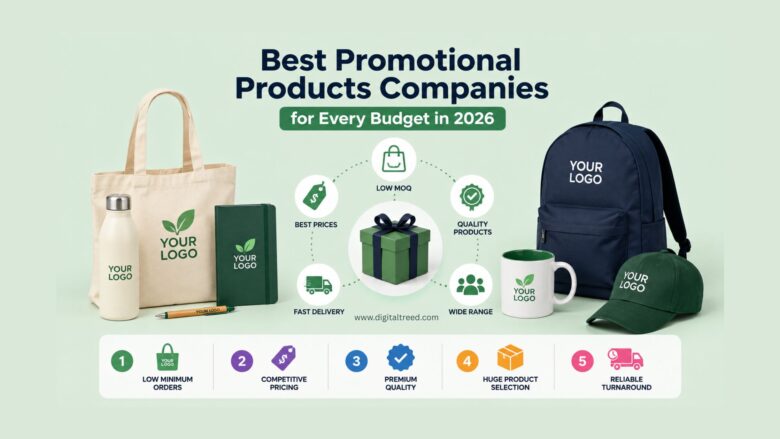
Below, we rank the 5 best promotional products companies for U.S. businesses in 2026, evaluated on minimum order quantity, pricing transparency, product range, proof process, and turnaround and shipping reliability. A ranked list follows so you can self-select fast.
At a glance
- Pamusan – best for low minimum orders and custom tote bags (MOQ from 5 units)
- Totally Promotional – best for high-volume giveaways on a tight per-unit budget
- Swag.com – best for curated corporate swag kits and startup onboarding
- 4AllPromos – best for multi-category branded campaigns from a single supplier
- Positive Promotions – best for employee recognition, healthcare, and appreciation gifts
How we chose
We evaluated each of these promotional products companies against five buying criteria that matter most to U.S. businesses matching a supplier to their budget and campaign scale. The goal was practical segmentation, not a single “winner” – a supplier ideal for a five-unit test run is rarely the right fit for a 3,000-unit trade show haul.
Minimum order quantity (MOQ)
The lowest quantity a supplier will produce. A low MOQ lets startups, pop-ups, and test campaigns order small without overcommitting; a higher MOQ usually unlocks better per-unit volume pricing.
Pricing transparency
Whether prices are visible on-site or hidden behind a sales quote. Transparent, published pricing lets buyers budget quickly. The wider promotional merchandise market rewards suppliers that publish clear volume breaks.
Proof process
The steps between artwork and production. A free digital proof – a mockup you approve before anything is printed – reduces the risk of an expensive logo-placement mistake. Physical samples are a bonus where offered.
Product range and catalog depth
Some suppliers specialize deeply in one category; others carry dozens. Neither is inherently better – it depends on whether you need one product done well or many products in one order.
Turnaround and shipping reliability
How fast a supplier produces and ships, and how dependable fulfillment is. Domestic printers can be faster for rush jobs; direct-from-factory shipping can be more cost-effective at scale.
The 5 best promotional products companies for every budget in 2026
Applying those five criteria to the most useful options for U.S. businesses, the shortlist below spans the full budget range – from a founder ordering a handful of branded totes to a marketing team assembling a multi-SKU campaign. The right supplier depends on your campaign scale and the type of merchandise you need, so each entry names the segment it serves best. Number one is our overall top recommendation for the largest share of small and mid-market buyers.
#1. Pamusan – Best for low minimum orders and custom tote bags
For businesses, startups, and individuals who want custom canvas tote bags with a logo without committing to a large run, this is the standout pick of the group.
The specialist behind this entry, Pamusan, prints custom canvas and cotton tote bags from a minimum of just 5 units – the lowest entry point in this roundup. That makes it genuinely accessible for test runs, pop-up events, boutique retail, and small-batch branded gifting. Because production happens in house at the company’s own factory, wholesale-level pricing holds even at small order sizes, with no middleman markup inflating the per-bag cost. That combination is unusual: most suppliers reserve their best pricing for volume orders, whereas here the pricing model is built around low minimum orders from the start.
Every order includes a free digital proof before production begins, so buyers approve exactly how their logo will appear on the bag rather than gambling on the finished result. Shipping is worldwide and direct from the factory, which suits U.S. buyers ordering for domestic distribution. The trade-off for that specialist focus is breadth: this is a tote bag manufacturer, not a full-catalog promotional products distributor, so the depth of knowledge on canvas and cotton construction comes at the cost of category range. Reusable totes are among the trending branded merchandise items in 2026, which makes that narrow focus more of an asset than it might first appear – but it’s still a narrow focus.
| Pros | Cons |
|---|---|
| Industry-low MOQ of 5 units – no large upfront commitment required | Narrow product range – tote bags only; no drinkware, apparel, or tech accessories |
| Free digital proof included before production starts | Factory shipping may mean longer lead times than domestic printers for urgent rush orders |
| In-house manufacturing keeps bulk pricing low even at small quantities | No evidence of a physical sample program – buyers rely on digital proofs |
| Worldwide shipping direct from factory, suited to U.S. domestic distribution | Not a one-stop shop for multi-SKU promotional campaigns |
| Specialist depth in canvas and cotton tote construction |
Who it’s best for: Startups, small businesses, nonprofits, and event organizers who need bulk custom tote bags printed with a logo in small, affordable batches – and who value a low minimum order and a free digital proof over a sprawling catalog.
#2. Totally Promotional – Best for high-volume giveaways on a budget
When per-unit cost is the primary driver and you’re ordering by the hundred or thousand, this supplier is built for the job.
Totally Promotional runs a broad catalog of low-cost promotional items – bags, drinkware, pens, keychains, lanyards, and more – with volume pricing tiers that reward larger orders. It’s a strong fit for trade shows and conferences, where the calculus is simple: maximize the number of branded touchpoints while keeping the cost per giveaway as low as possible. Trade show swag bags stuffed with logo-only imprints are squarely in its wheelhouse. Pricing is visible on-site, so you can budget a giveaway campaign without waiting on a sales quote – a real advantage in a category where quote-only pricing is still common.
The catch is that the value proposition inverts for small orders. The promotional products wholesale pricing advantage kicks in at volume, so a buyer needing only a handful of items pays comparatively more. Product quality here is functional rather than premium, and customization depth is shallower than what a specialist manufacturer offers, so it’s not the place for high-end corporate gifting or complex artwork.
| Pros | Cons |
|---|---|
| Wide catalog spanning dozens of promotional categories | Less economical for small-batch or low-MOQ orders |
| Competitive per-unit pricing at volume | Product quality is functional, not premium |
| U.S.-based fulfillment with domestic shipping options | Limited customization depth versus specialist suppliers |
| Transparent on-site pricing without a required sales quote | Design support can be basic for complex artwork |
| Reliable for standardized, logo-only imprints on everyday items |
Who it’s best for: Event organizers and trade-show marketers running mass-giveaway campaigns who need thousands of affordable branded items and care most about per-unit cost.
#3. Swag.com – Best for curated corporate swag kits and startup onboarding
For HR and operations teams that want a polished unboxing experience rather than a box of loose promo, this is the curation-first option.
Swag.com assembles pre-curated swag boxes – apparel, drinkware, tech accessories, and stationery in branded packaging – aimed at employee onboarding, client gifting, and campaign launches. The appeal is turnkey convenience: instead of sourcing and assembling items yourself, you select a kit and the company handles fulfillment, including warehousing and on-demand shipping for ongoing programs. That’s especially useful for remote-first workplace cultures and distributed team onboarding, where mailing a well-designed welcome kit does real work for morale. The product selection leans premium, with recognizable brand-name items that read as genuine corporate gifting rather than throwaway freebies.
The premium positioning is also the limitation. Per-unit costs run higher than volume-focused suppliers, so it’s the wrong tool for mass trade-show giveaways. Buyers who want to mix bespoke one-off items outside the curated kits will find it less flexible, and minimum spend thresholds can be prohibitive for very small teams. This is branded merchandise optimized for perceived value, not for cost per impression.
| Pros | Cons |
|---|---|
| Turnkey swag kits reduce sourcing and assembly burden | Higher per-unit cost than volume suppliers |
| Premium selection with recognizable brand-name items | Less flexible for custom one-off items outside curated kits |
| Branded packaging for a strong unboxing experience | Minimum spend thresholds may be steep for very small teams |
| Warehousing and on-demand fulfillment for recurring programs | Premium positioning is overkill for basic giveaways |
| Well-suited to remote welcome packages and client gifting |
Who it’s best for: HR teams, VC-backed startups, and remote-first companies that want premium, pre-assembled swag boxes for onboarding, gifting, or launches.
#4. 4AllPromos – Best for multi-category promo campaigns
When a single campaign needs several product types – drinkware, apparel, tech, and bags – from one vendor, consolidation is the whole point.
4AllPromos carries a broad multi-category catalog with custom imprinting across product types and a range of imprint methods, from screen printing to embroidery to laser engraving. For marketing managers running a multi-item campaign, ordering custom promotional products with a logo across categories from one distributor cuts down on vendor management and keeps branding consistent. Pricing is visible online with volume breaks, and the minimums are accessible to mid-market budgets rather than enterprise-only. As a maker of promotional apparel and hard goods alike, it’s a practical one-stop for recurring campaign needs.
The compromise is inherent in the generalist model: it isn’t a specialist in any one category, so the depth per product type is shallower than a niche manufacturer’s. Premium and luxury options are limited compared with curated swag specialists, and customer service and proof turnaround can vary during peak ordering periods. It’s better tuned to standard promotional items than to highly bespoke or unusual merchandise.
| Pros | Cons |
|---|---|
| One-stop sourcing across many product categories | Not a specialist – depth per category is shallower than niche suppliers |
| Transparent online pricing with volume discounts | Service and proof turnaround can vary at peak periods |
| Multiple imprint methods (screen print, embroidery, laser engraving) | Limited premium or luxury product options |
| Mid-market minimums without enterprise-level thresholds | Better for standard items than bespoke merchandise |
| Consistent catalog depth for recurring campaigns |
Who it’s best for: Marketing managers and brand teams running multi-item campaigns who want drinkware, apparel, tech accessories, and bags from a single supplier.
#5. Positive Promotions – Best for employee recognition, healthcare, and appreciation gifts
For recognition programs and mission-driven organizations, this supplier’s catalog is tuned to a specific, purpose-led audience.
Positive Promotions specializes in recognition and appreciation merchandise – themed gift sets, wellness-focused items, and products aimed at healthcare, education, and nonprofit buyers. Where general promotional products companies chase brand awareness, this one leans into meaning: employee appreciation gifts, patient-facing wellness items, and school and nonprofit programs. Its long operating history and reliable fulfillment for institutional and recurring orders make it a dependable choice for HR departments and healthcare administrators sourcing recognition merchandise, and some items are available at lower quantities given the gifting focus. For a small healthcare practice or nonprofit buying small business promotional items with a recognition angle, that’s a natural fit.
The specialization narrows its appeal. The catalog skews institutional rather than trendy or premium, so it’s less relevant for general marketing or trade-show campaigns and holds limited appeal for consumer-facing brand launches. Catalog breadth outside the recognition and healthcare verticals is thin – this is depth in a lane, not a general-purpose promotional supplier.
| Pros | Cons |
|---|---|
| Deep specialization in recognition, appreciation, and wellness merchandise | Narrow audience fit – less relevant for general marketing campaigns |
| Strong track record with healthcare, education, and nonprofit buyers | Aesthetic skews institutional rather than trendy or premium |
| Themed gift sets reduce sourcing effort for recognition programs | Limited appeal for startups or consumer-facing brands |
| Reliable fulfillment for institutional and recurring orders | Little catalog breadth outside recognition and healthcare |
| Catalog tuned to purpose-driven, meaningful branded items |
Who it’s best for: Healthcare organizations, nonprofits, HR departments, and schools sourcing recognition-focused merchandise, themed gift sets, and appreciation items – often for corporate gifting to employees.
Frequently asked questions about promotional products
Should I invest in promotional products for a small business at all?
For most small businesses, yes – promotional products are one of the more durable forms of advertising because a branded item generates repeated brand impressions over its usable life rather than a single exposure. The most popular small business promotional items are practical, reusable goods: tote bags, drinkware, pens, and apparel. Start with one high-use item that fits your budget rather than spreading a small order across too many categories.
What is the minimum order quantity for custom promotional products, and does it matter?
It matters a lot, and it varies widely by supplier. Volume-focused companies often expect orders in the hundreds before pricing becomes competitive, while specialists set much lower floors – Pamusan, for example, prints custom canvas tote bags from just 5 units. If you’re testing a design or running a small event, a low minimum order lets you avoid overcommitting to inventory you may not use.
Is it worth ordering promotional products in small quantities, or do you always pay a premium?
You don’t always pay a premium – it depends on the supplier’s business model. Companies built around volume charge more per unit at low quantities, but manufacturers that produce in house and specialize in a single category can offer wholesale-level pricing even on small runs. That’s the model Pamusan uses for bulk custom tote bags, which is why small orders remain economical there.
How much do custom promotional products with a logo cost?
Costs vary by product, quantity, imprint method, and supplier, so any single figure would mislead more than help. As a rule, per-unit price drops as quantity rises, and simpler logo-only imprints cost less than complex multi-color or embroidered designs. The practical move is to request pricing at two or three quantity tiers and compare per-unit cost – and confirm whether a free digital proof is included before you commit.
Should I ask for a proof or sample before ordering?
Almost always. A free digital proof – a mockup of your artwork on the product – is the single most valuable step for avoiding an expensive logo-placement or color error, and reputable suppliers include one before production. Some companies also offer physical samples; where they do, it’s worth the small cost for a large order. Treat the proof process as a core selection criterion, not an afterthought.
Are canvas tote bags effective as promotional products?
Canvas tote bags are among the most effective options because they’re reusable, highly visible in public, and increasingly favored as eco-friendly branded merchandise in 2026. A well-made tote carries your logo through daily errands for months or years, compounding brand impressions at a low cost per exposure. Their low entry point is another advantage – a supplier like Pamusan will print custom totes from as few as 5 units, so even a small business can test the format affordably.
What counts as a promotional product for tax purposes?
Generally, promotional products given away to promote a business – items branded with a logo or tagline and distributed at little or no cost – may be treated as advertising or marketing expenses, while gifts to specific individuals can fall under separate limits. Rules differ by jurisdiction and situation, so this is a question for a qualified tax professional rather than a buying guide. Keep clear records of quantities, costs, and how items were distributed.
The takeaway
The right promotional products company depends less on reputation than on the shape of your order. Choose Totally Promotional for high-volume giveaways where per-unit cost rules, Swag.com for premium curated onboarding kits, 4AllPromos when one campaign spans many categories, and Positive Promotions for recognition and healthcare gifting. For the largest group of buyers – startups, small businesses, and anyone who needs custom tote bags in a small, affordable batch with a free digital proof – the low 5-unit minimum makes Pamusan the most accessible starting point of the five. Before you order, map your own numbers first: the quantity you actually need and the budget you have. Match those to the supplier built for your scale, and the shortlist above should point you to the right one.
