

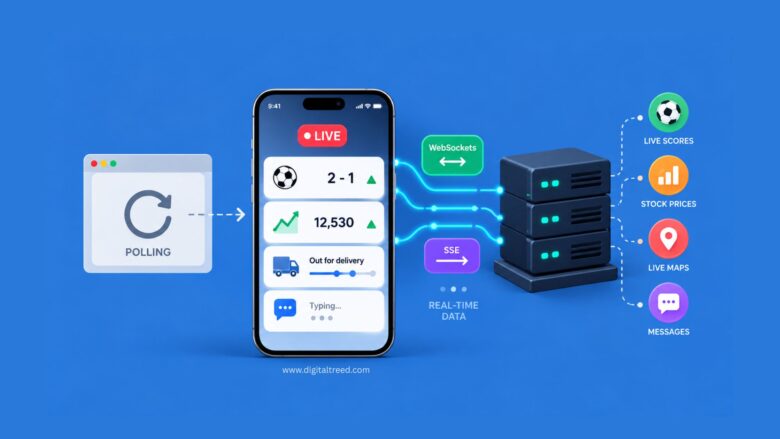
A number on a phone screen changes. Nobody tapped anything, no page reloaded, and the app never asked permission. That small trick sits behind live scores, delivery maps, message threads and stock tickers. It took the web roughly fifteen years to get right, and the plumbing is stranger than most people assume.
Refresh Used to Be a Button
Early web pages had exactly one move. Ask the server, take an answer, close the connection. Anyone who wanted fresh information hit refresh, which is why the button occupied prime real estate in every browser toolbar.
Developers automated the tapping and called it polling. The browser now asked “anything new?” every few seconds, whether anything had happened or not. Most of those questions came back with a shrug. Polling still runs quietly inside plenty of products, and it does the job when a weather panel updates every ten minutes. The same background machinery shows up in the best betting app in Bangladesh, where odds move on their own while the user stares at a screen that never reloads. Ask too often, though, and the battery starts filing complaints.
Wasteful? Very. But polling never really broke, and that counts for something.
Then Someone Left the Door Open
In December 2011 the IETF published RFC 6455 and handed the web WebSockets. Instead of knocking repeatedly, the browser opens a single connection and keeps it open. Either side speaks whenever it has something to say. Firefox, Safari, Internet Explorer and Opera all shipped support across 2012, and by 2013 the protocol had gone from clever hack to background furniture.
Everyone reaches for the same metaphor here, a phone call instead of an exchange of letters. For once the metaphor earns its keep. No handshake per message, no polite empty replies, no timer counting down to the next pointless request.
Once servers could speak first, entire product categories became possible:
- Typing indicators appear in a chat before the message itself lands
- Dashboards redraw a chart while nobody touches the keyboard
- Collaborative documents let two people edit the same paragraph without fighting
- On a ride-hailing map, the little car crawls along by itself
Staying Connected Is Not Free
Persistent connections cost real money. Every open socket holds memory on a server, and that bill arrives with scale. One published benchmark put a single tuned node at roughly 240,000 concurrent connections while keeping message latency under 50 milliseconds. Respectable, though one node never tells the whole story.
Discord illustrates the ceiling better than any benchmark. Reports place it well past twelve million concurrent users pushing tens of millions of events every second, although the figures wander by source and year, with one 2026 write-up quoting a much higher 45 million. The company rebuilt its connection gateway more than once to survive that load. For a stretch, four engineers ran the core of it. That reads like a typo. Apparently it isn’t.
When Polling Is Still the Right Answer
Not every screen deserves a live wire, and reaching for a socket by reflex creates work nobody asked for. Before opening one, ask what the instant update actually buys the person holding the phone. A few honest tests:
- Does a thirty second delay hurt anyone? If not, poll and go home.
- Corporate proxies still block persistent connections in plenty of offices, and long polling slips through where WebSockets stall.
- Server-Sent Events push in one direction only. That suits notifications, alerts and streaming text.
- Running all three approaches inside one product counts as normal engineering, not a design failure.
The Seconds Nobody Sees
Real time is partly a marketing word. Take live sport, where the chain between the pitch and a phone screen runs longer than most fans imagine:
- A scout at the ground records what just happened
- Feed providers normalise the event and pass it down the line
- Somewhere in a data centre, a pricing engine recalculates
- Down the open socket it travels, into a device in someone’s hand
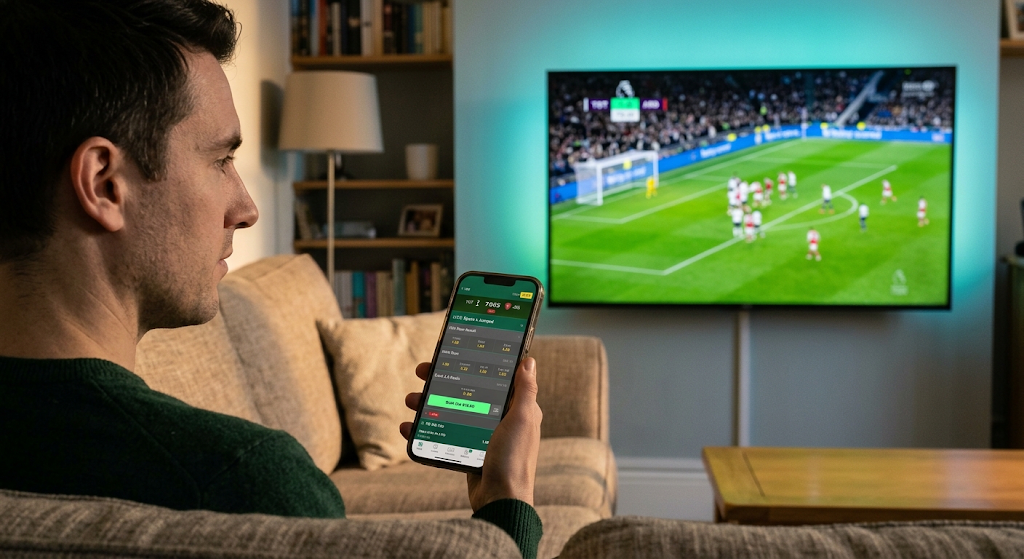
Television quietly makes everything worse. A standard cable feed or a streaming app can sit seven to thirty seconds behind the actual play, and Amazon has described glass-to-glass streaming delays reaching 45 to 60 seconds for some sports viewers. Anyone reacting to a TV picture is reacting to the past. Sound familiar?
Operators have been attacking that gap with money. One horse racing platform reported cutting latency from 12 seconds down to roughly half a second, and average watch time climbed by 29 percent afterwards. Half a second, and people stayed a third longer.
For a number that moves on a screen, that is a strange amount of engineering. It is also the reason nobody remembers where the refresh button went.
