

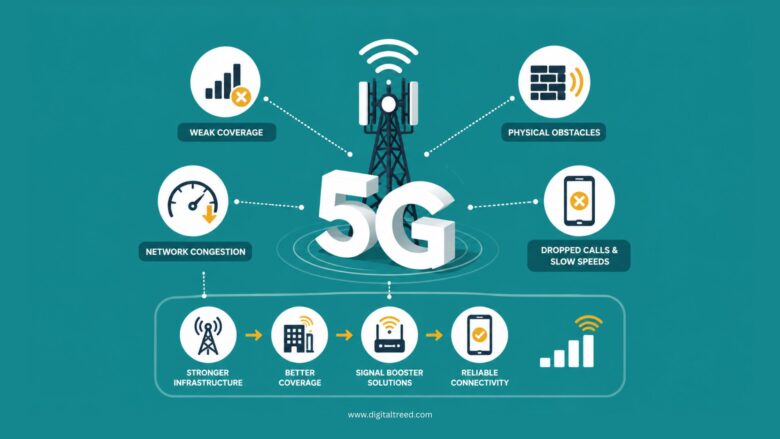
When 5G technology was introduced, it was promoted as the future of mobile connectivity. Faster download speeds, lower latency, and support for more connected devices created excitement among consumers and businesses alike. While 5G has delivered meaningful improvements in many areas, it hasn’t eliminated every connectivity challenge.
Many people still experience dropped calls, slow data speeds, and unreliable coverage despite having access to a 5G network. Understanding why these problems persist can help users make smarter decisions about improving their mobile experience.
Coverage Isn’t the Same Everywhere
One of the biggest misconceptions about 5G is that it’s available everywhere. In reality, network coverage varies significantly depending on location. Urban areas often receive stronger signals because they’re served by more cellular towers, while rural communities may have limited 5G access.
Even within cities, coverage can be inconsistent. Buildings, underground spaces, parking garages, and crowded venues can weaken or block mobile signals. Simply seeing a 5G icon on your phone doesn’t always guarantee a strong or stable connection.
Physical Obstacles Still Matter
Unlike older cellular technologies, some 5G frequencies have shorter ranges and struggle to penetrate thick walls or other obstacles. Construction materials such as concrete, metal, and energy-efficient glass can interfere with signal strength inside homes and office buildings.
This means users may notice excellent speeds outdoors but experience slower performance once they move indoors. These limitations aren’t caused by their device alone but by how radio signals naturally behave.
Network Congestion Can Reduce Performance
Even the most advanced mobile networks have capacity limits. During busy hours or at large public events, thousands of devices may compete for the same network resources. As a result, users can experience slower speeds, buffering, or delayed connections despite being connected to 5G.
This highlights an important point: faster technology doesn’t completely eliminate congestion. Network demand continues to grow as more people stream videos, participate in video meetings, and connect smart devices throughout the day.
Better Coverage Sometimes Requires Additional Solutions
For people living or working in areas with consistently weak indoor reception, upgrading to a 5G phone alone may not solve the issue. In some situations, improving the signal entering the building can make a much bigger difference.
Learning about solutions such as Uctel can help users understand how mobile signal boosters work and whether they may be appropriate for improving indoor coverage where network signals struggle to reach.
Technology Continues to Evolve
5G remains an important step forward for mobile communications, but it’s not a universal fix for every connectivity problem. Coverage expansion, infrastructure improvements, and ongoing network upgrades will continue to improve performance over time.
In the meantime, factors like location, building construction, network congestion, and signal strength still play major roles in determining the quality of a mobile connection. By understanding these limitations, users can set realistic expectations and explore practical solutions when connectivity challenges arise.
Ultimately, reliable communication depends on more than simply having access to the latest network generation. A combination of strong infrastructure, proper coverage, and the right supporting technology is what delivers the dependable mobile experience that users expect every day.
