

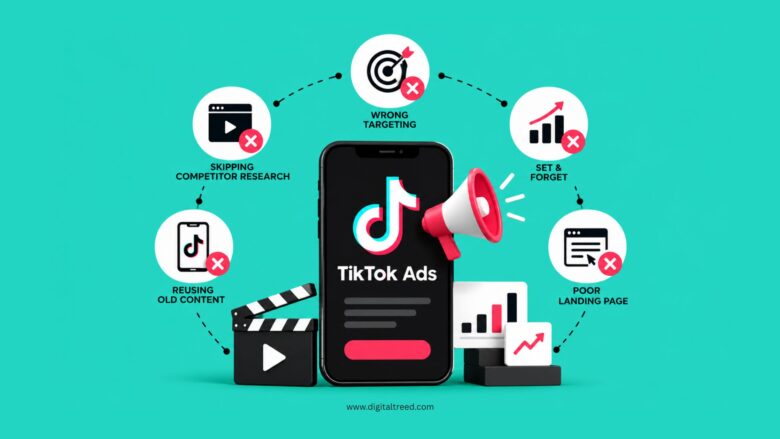
TikTok has become one of the most powerful paid advertising channels in the US, yet most brands still treat it like a rerun of their Facebook or Instagram strategy. That approach wastes budget faster than almost anything else.
Understanding the 5 common mistakes brands avoid when running TikTok ads doesn’t just protect your spend. It tells you exactly where your competitors are already pulling ahead, and what you can do differently starting today.
1. Ignoring How Competitors Structure Their Creatives
The first thing sharp advertisers do before launching a TikTok campaign is study what’s already performing in their niche. The TikTok Ads Library gives you direct visibility into live and historical creatives across dozens of markets – letting you analyze structure, hook timing, call-to-action placement, and demographic targeting data that would otherwise take months of in-house testing to discover. Brands that skip this research phase end up running ads built on assumptions. And assumptions on TikTok are expensive.
Most successful TikTok ads follow a recognizable structure: a pattern-interrupt in the first two seconds, a brief product demo, and a tight close that gives viewers a reason to act. Brands that skip studying this structure fall back on polished, brand-guideline-heavy videos that feel like TV commercials. Watch time is what TikTok’s algorithm rewards, not production value. Skipping competitive research means missing the specific creative patterns that have already proven they hold attention in your category.
2. Treating TikTok Like a Repurposed Channel
Brands that recycle Instagram Reels or YouTube Shorts for TikTok consistently underperform. TikTok’s native aesthetic is its own thing, and its audience spots inauthentic content almost instantly. Vertical format is just the baseline; the real issue is energy, pacing, and voice. TikTok users want content that feels spontaneous, human, and a little rough around the edges. A corporate voiceover over a clean product shot might work on LinkedIn, but it tanks on TikTok.
The fix isn’t to abandon your brand identity. It’s to adapt the delivery. Brands that succeed on TikTok film content that looks like it belongs in a creator’s feed, not a media plan. That means natural lighting, direct-to-camera addresses, trending audio where it fits, and copy that speaks the way people actually talk. You don’t need a lower budget; you need a different production mindset. Treat every ad as a piece of content first and a sales vehicle second.
3. Setting and Forgetting the Campaign
TikTok’s ad auction moves fast. A creative that generates strong click-through rates in week one can become fatigued by week three. Brands that set campaigns live and check results once a month miss the window where it actually matters to adjust performance. The platform rewards active management, pulling underperforming ad sets, scaling what’s working, and rotating in fresh creatives before the algorithm has a reason to deprioritize you.
Creative fatigue hits earlier on TikTok than on most other platforms because the sheer volume of content users consume each day is massive. A practical rule of thumb: check frequency and cost per result every three to five days during an active campaign. If frequency climbs past two to three and cost per click rises more than 25%, a creative refresh is overdue. Brands that treat this as a non-negotiable part of their workflow consistently hold better returns than those running passive campaigns.
4. Targeting Too Broadly or Too Narrowly
TikTok’s targeting options are genuinely powerful, but they punish extremes. Brands that go too broad – wide age ranges, national geo, no interest refinement – hand the algorithm a massive canvas with no useful signal. The algorithm depends on early conversion data to find more of the right people. Without that signal, it optimizes toward reach rather than results.
But over-restricting targeting is just as damaging. Narrowing your audience to a few hundred thousand people with five stacked interest filters cuts the machine learning out of its best work, and that’s what makes TikTok’s ad system effective in the first place. For most US-based campaigns, the sweet spot sits between two million and ten million addressable users, depending on your vertical. Start with a defined but not rigid audience, let the campaign gather data for five to seven days before making changes, and then refine based on what the platform actually tells you, not what you assumed before launch.
5. Skipping the Landing Page Connection
Your TikTok ad can be perfect – great hook, strong creative, right audience – and still produce poor results if the landing page breaks the experience. Brands routinely underestimate how much the post-click experience needs to match the tone, speed, and message of the ad itself. A TikTok user who taps through expects something fast, mobile-first, and immediately relevant. A slow-loading desktop page with generic homepage copy is enough to kill a conversion rate that looked promising in the ad manager.
Check your mobile load speed before you touch your bids. Tools like Google’s PageSpeed Insights show you exactly where friction lives. Beyond speed, the landing page should reflect the specific promise the ad made – if the ad featured a $29 product with free shipping, that offer needs to appear above the fold without scrolling. Don’t make users hunt for the action you want them to take. One clear button, one clear message, matched to what the ad already said – that alignment between ad and destination is where a lot of TikTok budget quietly leaks.
Conclusion
The 5 common mistakes brands avoid when running TikTok ads all trace back to the same underlying issue: treating TikTok as a passive channel rather than an active, research-driven one. Studying competitor creatives, matching the platform’s native style, staying on top of performance data, calibrating audience size, and aligning your landing page with your ad are five things you can start doing right now. None of them require a bigger budget, just a more deliberate approach.
