
Quick answer
Five marketing automation blogs passed our feed check on November 20, 2026: the HubSpot Marketing Blog, Zapier, Omnisend, GetResponse and Litmus. Each posted in the past 90 days, credited people (Litmus only by first name or handle) and covered email or automation. Eight of the 13 blogs we looked at missed a rule or couldn't be read. Start with the blog of the tool you already use.
Marketing automation blogs from our 2020 list didn't age well. When we rechecked them, one address forwarded to Adobe and another blog hadn't posted since April. Marketing automation is a rules engine in your email tool that sends an email or creates a task by itself when someone signs up, clicks or leaves a cart.
The five blogs below still write about it for people who run email at a US shop or a small agency. Most of their feed items credit a person. If you only have time for two, keep Zapier for its recipes and the blog of the email tool you're using now.
Key takeaways
- Check a blog's RSS feed date before you subscribe to it.
- HubSpot's feed held 50 posts dated within 90 days of November 20.
- The old Marketo blog address now forwards to Adobe's business blog.
- CAN-SPAM gives a sender 10 business days to honor an unsubscribe.
- Gmail and Yahoo both ask senders to keep spam rates below 0.3%.
How we picked these marketing automation blogs
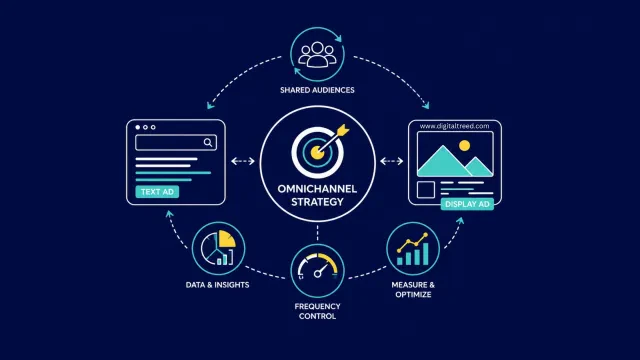
Our 2020 list never said how it chose anything. This time we wrote three rules first, and each one can be checked from a blog's public RSS feed:
- It published at least one item between August 22 and November 20, 2026, a 90-day window.
- More than half of its feed items credit a person by name or handle, not the company, a team account or a bot.
- At least 3 feed titles mention automation, drip campaigns, workflows, email or CRM.
We ran the rules on November 20, 2026, and five of the 13 blogs passed all three. They're listed in the table by items in the 90 days, most first. Five of the 13 came from our 2020 list, including the one that now forwards to Adobe. The other eight are marketing and email blogs we added for comparison, and one of them, Customer.io, had no working feed. Rule 2 counts first names and handles as people, and that matters: on full names alone, Litmus would fail and the list would have four blogs. A feed shows only a blog's newest 10 to 50 items, so every count here is a floor, not a total.
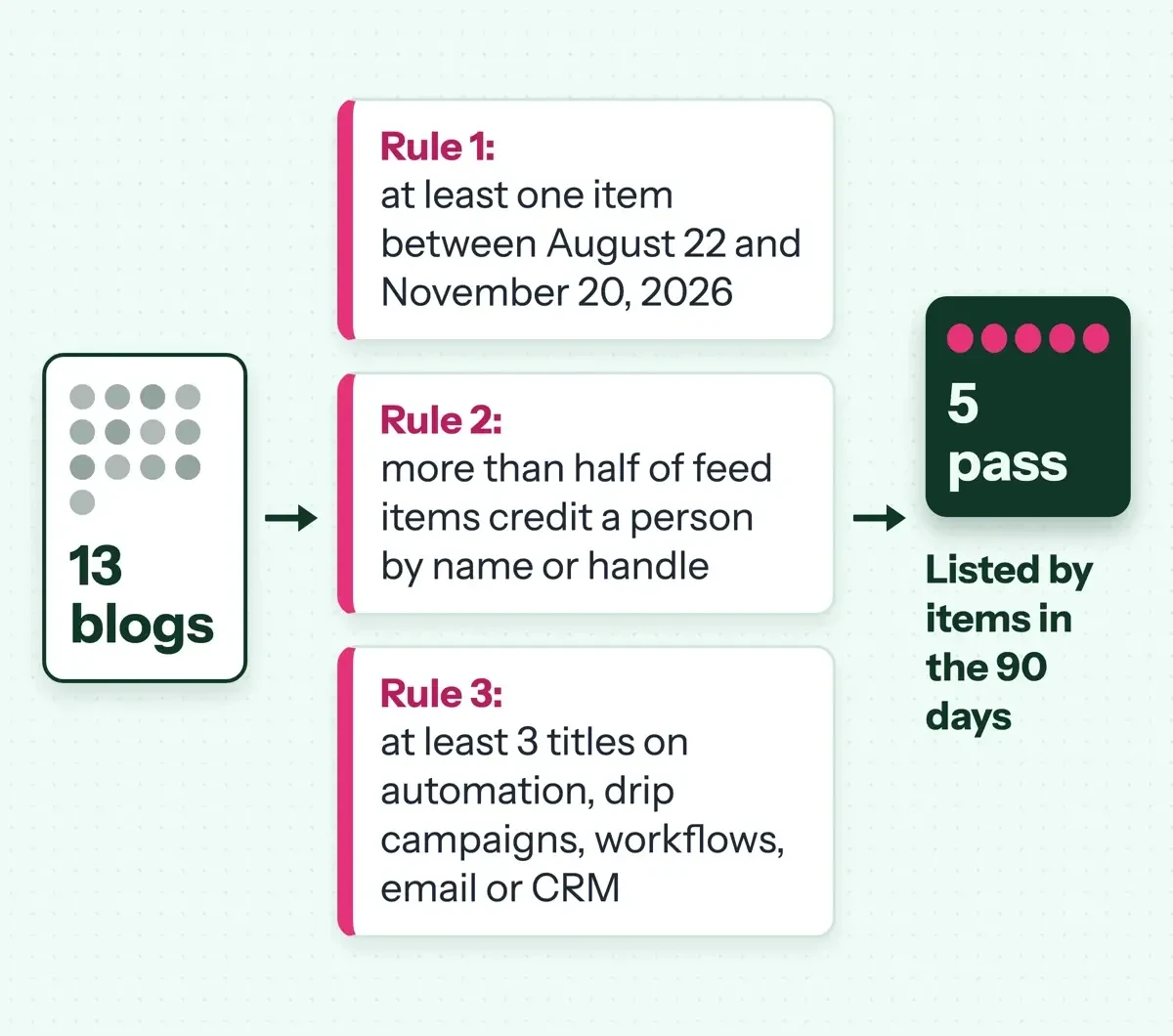 Diagram by DigitalTreed of the selection rules we ran on November 20, 2026.
What we tested
We saved each blog's feed with plain requests on November 20, 2026. Then a small Python script read the saved files offline, counting each item's date, author field and title. ActiveCampaign's two usual feed addresses returned 404, so we read its blog sitemaps instead. A sitemap records when a page last changed, not when it first went up, and 10 of the 13 blogs gave us a feed or sitemap to count.
Zapier's feed held the one oddity, an item dated November 10, 2027. The script kept it apart from the 24 Zapier items dated inside the window.
The five blogs, checked on November 20, 2026
Zapier, like the other four picks, is a software company, and posts dated inside the window tend to use its own product in examples. None of the five companies asked to be listed, and no link here is an affiliate link.
| Blog | Newest item | Items in the 90 days | Items crediting a person | Automation or email titles |
|---|---|---|---|---|
| HubSpot Marketing Blog | November 19, 2026 | 50 of 50 | 29 of 50 | 4 |
| Zapier blog | November 20, 2026 | 24 of 25 | 25 of 25 | 21 |
| Omnisend blog | November 19, 2026 | 10 of 10 | 10 of 10 | 7 |
| GetResponse blog | November 6, 2026 | 6 of 10 | 10 of 10 | 6 |
| Litmus blog | September 2, 2026 | 2 of 10 | 9 of 10 (first name or handle) | 9 |
GetResponse and Litmus post far less often than the other three: GetResponse's 10-item feed reaches back to February 2, 2026, and Litmus's to July 5, 2026.
1. HubSpot Marketing Blog
The HubSpot Marketing Blog posts more than anything else we checked, with all 50 items in its feed dated between October 6 and November 19, 2026. The catch is credit: 21 of the 50 are signed "HubSpot Staff," so don't trust a how-to there until you've found a named byline. Océane Li's "Obstacles in marketing automation and how to fix them," dated November 6, is one that does.
HubSpot also surveys its own audience. Its 2026 State of Marketing Report says "61% of marketers believe that marketing is experiencing its biggest disruption in 20 years due to AI." It's a survey of HubSpot's own audience, as of November 2026.
2. Zapier blog
The Zapier blog is the one we'd open for step-by-step automation recipes. Of the 25 titles in its feed, 21 matched our automation words. Every item named its author in full. A typical post takes one app and shows the triggers you can build around it, as in "Google Forms automation: How to automate Google Forms with Zapier." Zapier's own blog header puts its reach at 9,000+ apps, so you'll find most recipes end inside Zapier.
3. Omnisend blog
The Omnisend blog writes for online stores, and 5 of the 10 titles in its feed were collections of email examples. All 10 feed items were dated November 16 to 19, 2026, each under a full author name, and 7 of the 10 titles matched our email or automation words. Posts such as "Browse abandonment email: 11 examples, flow, and subject lines" lay out the flow and the copy, and you can rebuild both in whatever email tool you use.
4. GetResponse blog
The GetResponse blog had 6 items in our window, the newest on November 6, 2026, and all 10 items in its feed carried a full author name. Its titles lean toward lifecycle email, such as "How to create a lifecycle marketing strategy (tools + best practices)." One recent item announced a GetResponse feature for tracking revenue from automated emails, so expect product news between the how-tos.
5. Litmus blog
The Litmus blog covers email design, testing and deliverability, and 9 of its 10 feed titles matched our email words. Litmus is the slowest pick of the five. It had 2 items in the 90 days, the newest dated September 2, 2026, and its feed credits authors only by first name or handle, such as Lindsey and efischer. We saw no author name in the text of the post page we saved. Both Litmus pages we saved carry the line "Litmus is now part of Validity Engage," so expect Validity's name around the posts. Its August 26 post on email footers is a fair sample: it notes that laws like CAN-SPAM require the unsubscribe link.
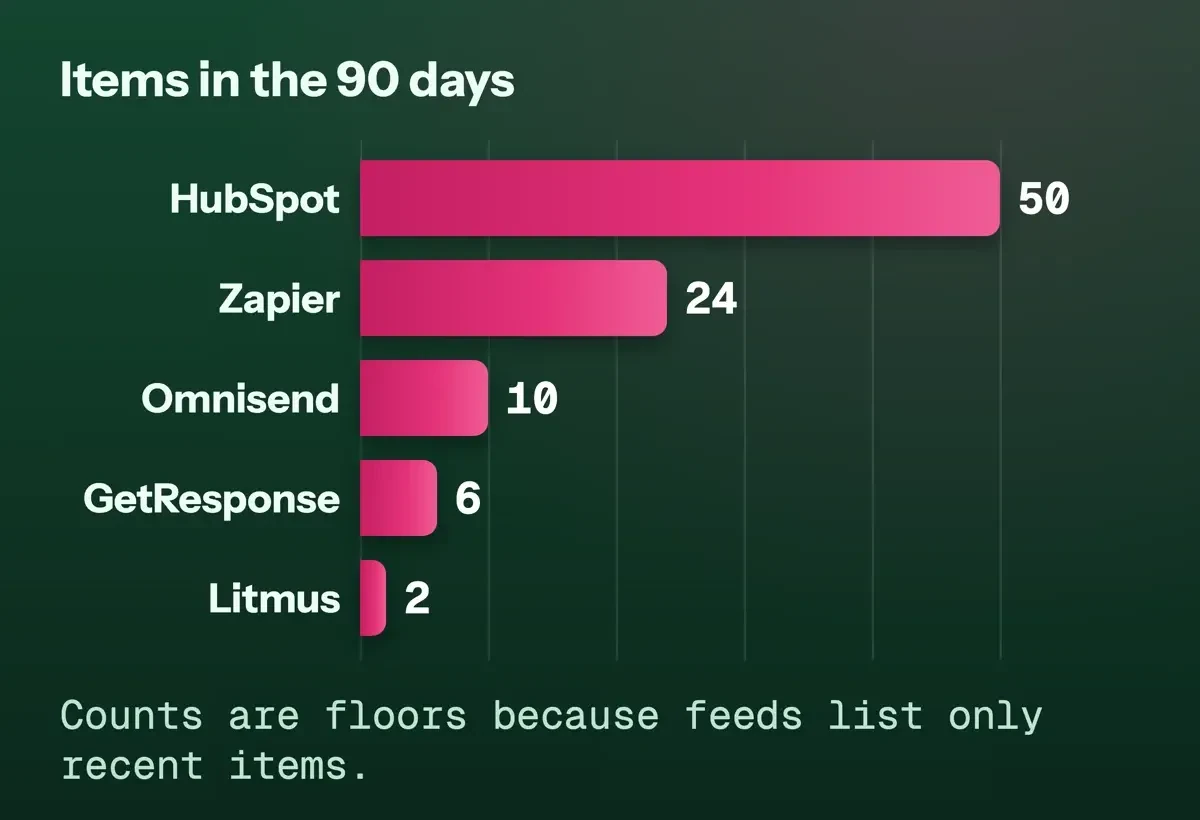 Drawn by us from our feed check of November 20, 2026; counts are floors because feeds list only recent items.
What happened to the Marketo blog?
Our 2020 list also linked to the blog of Marketo. That address still works. It doesn't stay at Marketo, though: on November 20, 2026, blog.marketo.com returned a permanent redirect (HTTP 301) to business.adobe.com/blog/, Adobe's business blog. Marketo Engage itself is an Adobe product now: Adobe's Experience League help for Marketo Engage lists it as part of Adobe Experience Cloud.
We couldn't check the Adobe blog the way we checked the others, because it timed out on all three of our plain requests. We don't work around blocks, so there's no feed date, author count or topic count for it here. The Internet Archive copy from November 18, 2026 shows the page loading normally under the title "Adobe for Business Blog." Open the Adobe blog yourself and check its newest post date before subscribing.
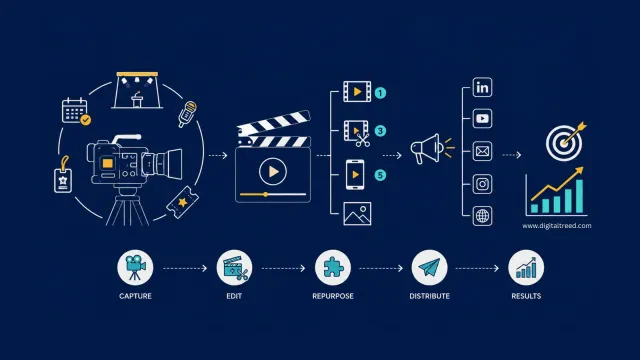
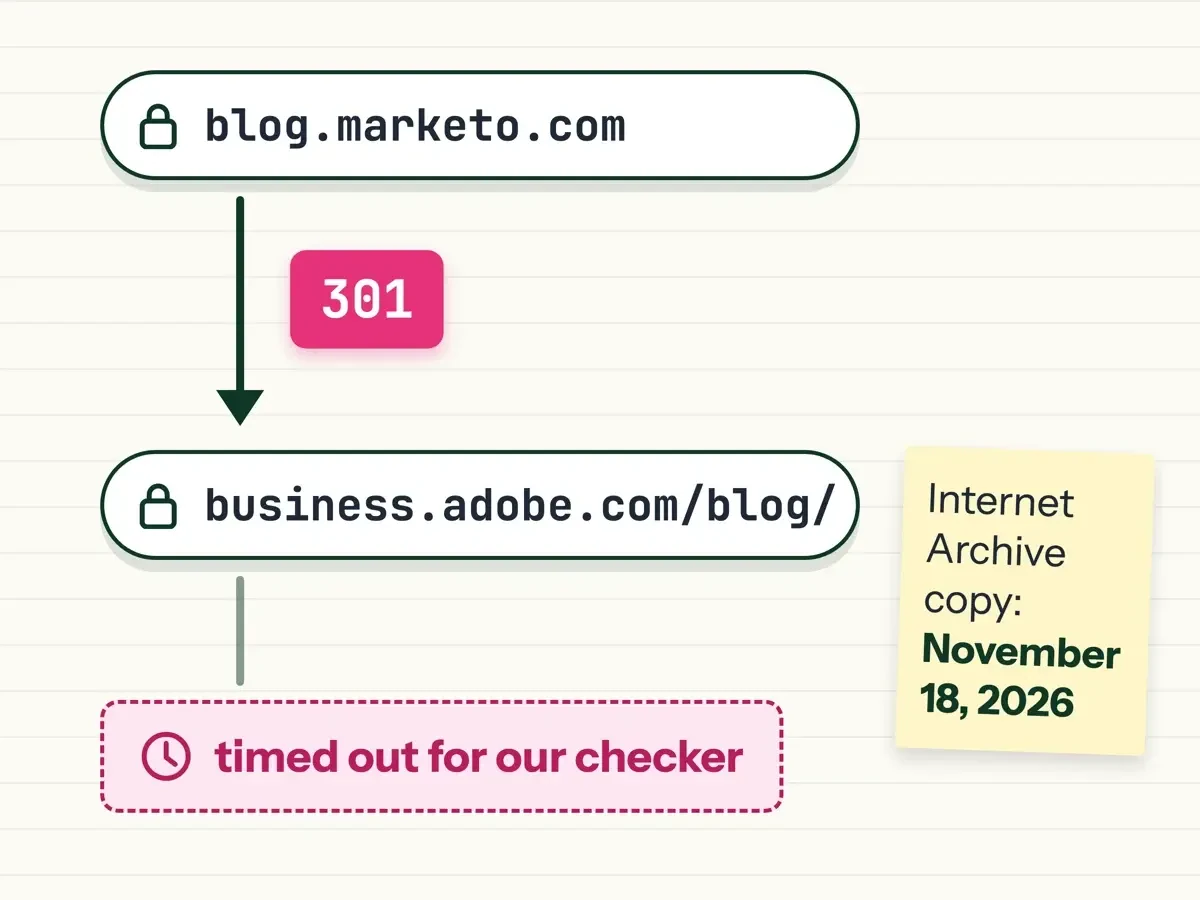 Diagram by DigitalTreed from our redirect check on November 20, 2026.
Blogs we checked and left out
Four of the eight blogs we left out were on our 2020 list, Adobe's old Marketo blog among them. ActiveCampaign, Customer.io and Goose Digital had no RSS feed we could find.
| Blog | What we found on November 20, 2026 | Why it isn't in the five |
|---|---|---|
| Campaign Monitor blog | 7 of 10 items credit the company, 3 a person; 1 item in the 90 days, newest September 3, 2026 | Rule 2 |
| MarTech | 10 items dated November 16-19, 2026; 0 titles on automation or email | Rule 3 |
| Salesforce blog | 10 items dated November 17-19, 2026; 0 titles on automation or email | Rule 3 |
| Quick Sprout | Newest item April 28, 2026; all 20 items credit Quick Sprout Editorial | Rules 1 and 2 |
| ActiveCampaign | No RSS feed; sitemaps show 156 blog pages changed in the 90 days; sampled post credits the company | Rule 2 |
| Customer.io | Old feed address forwards to a /learn page with no feed items | No feed |
| Goose Digital | Blog address opens a services content hub; /feed/ forwards to the home page | No feed |
| Adobe for Business Blog (old Marketo) | Timed out on our three plain requests | Not checked |
ActiveCampaign came closest. Its blog is busy, with 156 pages changed in the 90 days and 202 author pages in its authors sitemap. But the post we sampled names the company, not a person, as its author in the page data. MarTech failed on topic. Its footer lists the site as a trademark of Semrush Inc. Its newest posts were about AI and marketing operations, with no title matching our automation or email words. Quick Sprout failed two rules: its newest feed item is from April 28, 2026, and all 20 credit "Quick Sprout Editorial". If you already read ActiveCampaign or MarTech at work, missing our rules isn't a reason to stop reading them.
What marketing automation and drip campaigns cover
Most of what these blogs teach comes back to one building block, the drip campaign. A drip campaign is a series of emails or texts sent on a schedule after a trigger, like a signup or a first purchase. It stops once the person buys, books or opts out. Here's an example welcome drip for a made-up online candle shop:
- Day 0: the signup triggers a welcome email with the store's return policy.
- Day 2: a care guide for the first candle, with no offer in it.
- Day 5: a first-order discount code that expires in 7 days.
- Exit rule: a purchase or an unsubscribe ends the drip at once.
Each step is a rule the software checks by itself, so nobody has to remember to send the day-5 email. A browse-abandonment flow, like the one in the Omnisend post above, starts on a product view instead of a signup. Our guide to SMS drip campaigns covers texts instead of email. And our CRM automation guide puts these rules inside a CRM.
A review request sent after delivery can run as a drip too, as covered in automating customer review requests. Still picking a tool? Start with our list of free email marketing tools, or read how automation and AI are changing marketing.
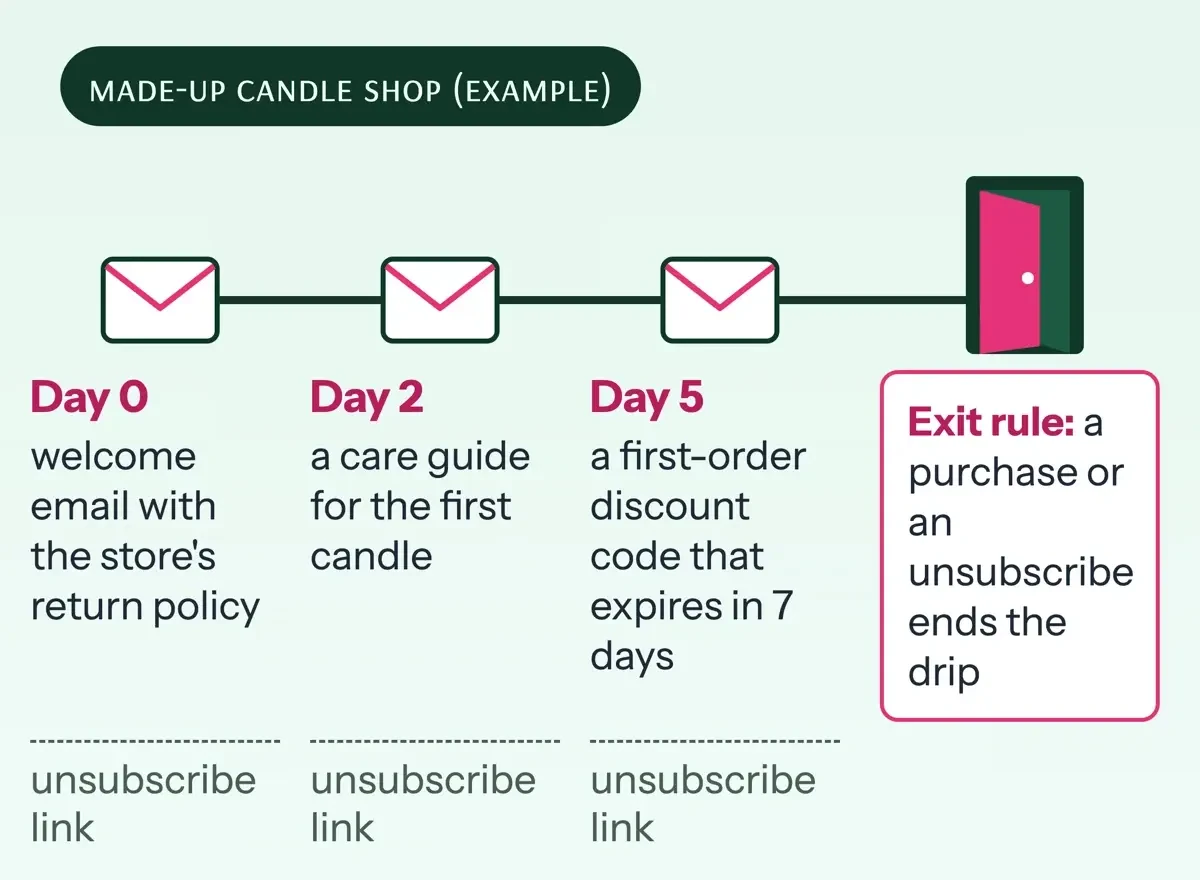 Drawn by us: an example drip with a made-up shop, with the CAN-SPAM opt-out shown at every step.
CAN-SPAM rules for automated email
Automation lets you send hundreds of emails you never read one by one, and that's exactly when a mistake in one template repeats across your whole list. The FTC, in its CAN-SPAM guide for business, says the act "doesn't apply just to bulk email" and covers any message whose primary purpose is commercial. It adds: "The law makes no exception for business-to-business email."
Each email in violation can draw a penalty of "up to $53,088," per the FTC guide as of November 2026. The penalty counts per email. In an example send of 1,000 emails, that's up to 1,000 separate violations. Each marketing email you send, whether it's the first in a drip or the fifth, needs a working opt-out and "your valid physical postal address." The FTC says you "must honor a recipient's opt-out request within 10 business days," the same limit set in 15 U.S.C. 7704. Hiring an agency doesn't shift the risk either, since "you can't contract away your legal responsibility to comply with the law."
Gmail and Yahoo go further. Google's email sender guidelines ask every sender to keep spam rates in Postmaster Tools below 0.3%. Above 5,000 messages a day to Gmail accounts, a sender also needs SPF, DKIM and DMARC. Its marketing and subscribed messages then "must support one-click unsubscribe." Yahoo's sender best practices set the same 0.3% line for all senders. Bulk senders are told to "Honor unsubscribes within 2 days," much faster than the law's 10 business days.
Before a drip goes live, check these in your email tool:
- Every marketing email in the drip shows your street address or registered PO box.
- Every email has a visible unsubscribe link, plus a one-click unsubscribe header if you send in bulk.
- An unsubscribe stops the whole drip, not only the next email.
- Unsubscribes are processed within 2 days, the Yahoo rule for bulk senders.
- Each subject line matches what the email actually says.
- SPF, DKIM and DMARC pass for the sending domain.
- The spam rate in Google Postmaster Tools stays below 0.3%.
Our free email checker can confirm an address is real before it enters a drip, which keeps bounces down. For the campaign around the drip, see how to run an email marketing campaign.
We've only summarized the FTC guide here, so ask a lawyer how the act fits your own list.
What we could and could not confirm on November 20, 2026
Every blog fact above comes from files we saved on November 20, 2026. For 10 of the 13 blogs a feed or sitemap loaded, and from those we confirmed post dates, author fields and titles, plus the Marketo redirect to Adobe. We read each CAN-SPAM, Gmail and Yahoo line on the source page itself.
Three blogs we couldn't read at all. Adobe's blog timed out, so we haven't checked its post dates, and Customer.io and Goose Digital had no feed. Author data is a weak spot too: a feed's author field can differ from the byline a browser shows, and Litmus is the clearest case. We didn't measure traffic, subscriber counts or how accurate each blog's advice is. So before you subscribe, open the blog, look at the newest date and see whether a real person signs the posts. Once your first drip is live, our guide to digital marketing expectations gives realistic timelines for email results.
Frequently asked
Is the Marketo blog still updated?
Its address, blog.marketo.com, now forwards to the Adobe for Business Blog. Our checker timed out there, but the Internet Archive saved the page with a normal response on November 18, 2026.
Does every automated email need an unsubscribe link?
Not every one. The FTC says a transactional or relationship message is "otherwise exempt from most provisions of the CAN-SPAM Act," such as one that "Facilitates, completes, or confirms a commercial transaction."
How can I check whether a blog is still active?
Open its RSS feed and read the newest date. Zapier's is at zapier.com/blog/feeds/latest/, and on November 20, 2026 it held 25 items.
Do Gmail sender rules apply to small senders?
Yes. Google's guidelines apply to all senders starting February 1, 2024, including SPF or DKIM, with stricter rules above 5,000 messages a day.
How we made this guide: We saved feeds, sitemaps or pages for 13 blogs, counted them offline with a script, and read the FTC, Google and Yahoo pages as text. Facts checked by the DigitalTreed team on November 20, 2026.
First published July 3, 2020 with five blogs and no stated method. Rewritten November 20, 2026 with dated feed checks.
Sources
- Marketo blog (now redirects to Adobe for Business Blog)
- Adobe Experience League: Marketo Engage documentation
- Internet Archive: Adobe for Business Blog, November 18, 2026
- HubSpot Marketing Blog
- HubSpot: 2026 State of Marketing Report
- Zapier blog
- Omnisend blog
- GetResponse blog
- Litmus blog
- Campaign Monitor blog
- MarTech: What is MarTech
- FTC: CAN-SPAM Act, A Compliance Guide for Business
- GovInfo: 15 U.S.C. 7704
- Google: Email sender guidelines
- Yahoo: Sender best practices
Comments
No comments yet. Start the conversation below.